Greg Walters Ai
  • Green Screen
  • CricketUS
  • Bio
  • The Last Sales Trainer
  • back page
    • Writers >
      • Celeste Dame
    • Sources and Methods

Facial Recognition: A Deep Cut of Deceptive Realism

1/1/2024

0 Comments

 
Picture
In the digital age, facial recognition technology (FRT) has emerged as a double-edged sword, offering both innovative solutions and posing significant threats to privacy and societal norms.

​The technology's rapid advancement and integration into various sectors, from security to retail, have sparked a critical debate on its implications for individual rights and the potential for authoritarian control. This article delves into the multifaceted nature of facial recognition, drawing insights from recent studies and legal actions to understand its impact on privacy, bias, and the broader societal context.
What You Will Know After Reading This:
  1. The Risks of Unregulated Use: Understand the potential harms of deploying facial recognition technology without proper oversight, as evidenced by the Rite Aid case.
  2. The Phenomenon of AI Hyperrealism: Gain insight into the psychological effects of AI-generated faces, particularly the deceptive realism that challenges our ability to distinguish between real and artificial.
  3. A deeper understanding of ​Deceptive Realism.
  4. Ethical Considerations: Threat to Progress and Security

"Rite Aid has 'used facial recognition technology in its retail stores without taking reasonable steps to address the risks that its deployment of such technology was likely to result in harm to consumers as a result of false-positive facial recognition match alerts.'"
What's going on with facial recognition?

The Case of Rite Aid: A Tale of Facial Recognition

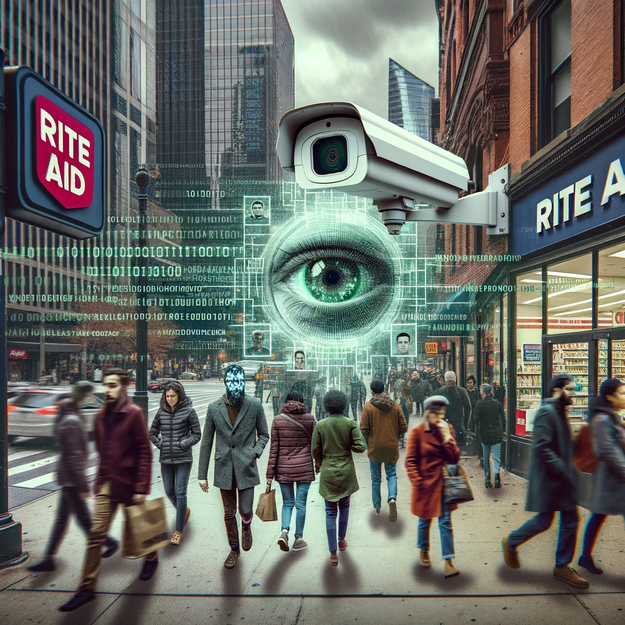
​The Federal Trade Commission's action against Rite Aid highlights the perils of deploying facial recognition technology without adequate safeguards. The drugstore chain's use of FRT in hundreds of its retail locations, primarily in urban areas, led to numerous false-positive match alerts, causing harm to consumers, particularly women and people of color. The proposed settlement, which bans Rite Aid from using any facial recognition system for security or surveillance purposes for five years, underscores the need for companies to consider the ethical and legal ramifications of using such technology.
​The Missteps of Rite Aid - Rite Aid implemented facial recognition technology across hundreds of its stores, many of which were located in densely populated urban areas. The intention behind this deployment was ostensibly to enhance security and prevent theft. However, the technology Rite Aid employed was fraught with inaccuracies, leading to a significant number of false-positive match alerts. These inaccuracies meant that individuals were often incorrectly identified as potential threats or criminals based on flawed facial recognition matches.
​Disproportionate Impact on Minorities

The FTC's investigation revealed a troubling aspect of Rite Aid's use of FRT: it disproportionately affected women and people of color. Due to inherent biases in the training data and algorithms, the technology was more likely to misidentify these groups, leading to false accusations and unwarranted scrutiny. This not only infringed on the privacy and dignity of affected individuals but also perpetuated systemic biases, contributing to a cycle of mistrust and discrimination.
​
Legal and Ethical Implications
​
The legal action culminated in a proposed settlement that prohibits Rite Aid from using any facial recognition system for security or surveillance purposes for a period of five years. Additionally, the company is required to delete the photos and videos collected through its facial recognition system between 2012 and 2020, along with any data, models, or algorithms derived from those visuals.

This settlement is significant as it not only addresses the immediate concerns related to Rite Aid's use of FRT but also sets a precedent for how companies should approach the use of such technology. It underscores the importance of conducting rigorous testing for accuracy and bias, implementing strict data privacy measures, and maintaining transparency with consumers about surveillance practices.
  1. Ethical Deployment: Businesses must prioritize ethical considerations in the deployment of facial recognition technology, ensuring that it is used in a manner that respects individual privacy and dignity.
  2. Accuracy and Bias Mitigation: Rigorous testing and continuous improvement are essential to minimize inaccuracies and biases in facial recognition systems. This includes diversifying training data and employing algorithms that are transparent and accountable.
  3. Regulatory Compliance: Companies must stay abreast of evolving regulations and guidelines related to privacy and data protection, ensuring their practices are in full compliance with legal standards.
  4. Public Transparency and Dialogue: Engaging with consumers and stakeholders about the use of surveillance technologies fosters trust and allows for a more informed public discourse on the balance between security and privacy.
The Rite Aid case serves as a critical lesson for all stakeholders involved in the development and deployment of facial recognition technology. 

Hyperrealism will mess with your mind.

​The Phenomenon of AI Hyperrealism: Psychological Effects

​Recent psychological research sheds light on an alarming trend: AI-generated white faces are now perceived as more real than actual human faces, a phenomenon termed "AI hyperrealism." This deceptive realism, particularly prevalent in white AI faces due to the disproportionate training on white faces, raises significant concerns about reinforcing racial biases and the potential for widespread misinformation. The study's findings indicate that people often fail to realize they are being deceived by AI faces, with those most confident in their judgment ironically being the most mistaken.
AI Hyperrealism refers to the phenomenon where AI-generated faces or images are perceived as more real or human-like than actual human faces. This deceptive realism is not just a technological marvel but also a psychological conundrum that challenges our ability to distinguish between what's real and what's artificial. The implications of this phenomenon are profound, affecting everything from social interactions to security, privacy, and even our understanding of truth.

Psychological Underpinnings of AI Hyperrealism
  1. Perception and Cognition: Humans are inherently wired to recognize and interpret faces, a skill crucial for social interaction. However, AI hyperrealism exploits this ability by creating faces that align perfectly with our psychological expectations of what a face should look like. The AI-generated faces often embody idealized features that are symmetric and average, which are typically perceived as more attractive due to their familiarity and ease of processing cognitively.
  2. Confidence and Error: The studies on AI hyperrealism reveal a paradoxical confidence effect. Individuals who are most likely to mistake AI for real humans are also the most confident in their judgment. This overconfidence, coupled with the inability to detect errors, is a classic example of the Dunning-Kruger effect in cognitive psychology, where the lack of expertise is misinterpreted as accuracy.
  3. Bias and Discrimination: The phenomenon also underscores the biases inherent in AI systems, particularly racial and gender biases. Since most AI models are trained on datasets that are not diverse, they tend to perpetuate and amplify these biases. This not only affects the accuracy of these systems but also raises ethical concerns about fairness and representation.

The Impact of Deceptive Realism
  1. Misinformation and Trust: In an era where fake news and misinformation are rampant, the ability of AI to generate hyperrealistic faces and content adds another layer of complexity. It becomes increasingly difficult for individuals to trust images and videos, leading to skepticism and potentially eroding the social fabric of trust.
  2. Security and Surveillance: The use of hyperrealistic AI in surveillance and security poses significant challenges. While it can improve the accuracy and efficiency of identifying individuals, it also raises privacy concerns and the potential for misuse. The inability to distinguish real from fake can be exploited for malicious purposes, from creating false evidence to impersonating individuals.
  3. Emotional and Social Consequences: On a more personal level, the inability to distinguish AI from humans can have emotional and social consequences. It can affect our interactions, our understanding of authenticity, and even our sense of identity. As AI-generated images become more prevalent, understanding and coping with these effects becomes crucial.

Deception is real.

​Deceptive Realism: Fake News

As artificial intelligence (AI) continues to evolve, its capabilities extend beyond convenience and innovation, ushering in a new era of challenges, particularly in the realm of information integrity. The phenomenon of deceptive realism, where AI-generated content is indistinguishable from authentic human-created material, is at the forefront of these challenges. This article explores the implications of AI's deceptive realism, focusing on the unprecedented rise in fake news and its impact on society, democracy, and global security
​The Surge in AI-Generated Fake News

A recent report by NewsGuard has highlighted a staggering increase in websites hosting AI-generated false articles, marking over a thousand percent growth since May. Unlike traditional propaganda, AI empowers a wide range of individuals, including state actors and teenagers, to create and disseminate false information through seemingly legitimate outlets. This democratization of misinformation is particularly concerning as it poses a direct threat to the integrity of upcoming elections, influences political candidates, and undermines military and aid efforts.
The Mechanics of Deceptive Realism

​AI's ability to mimic human-generated content has blurred the lines between fact and fiction. Advanced chatbots, image creators, and voice cloners contribute to producing articles, videos, and audio clips that closely resemble authentic news. This deceptive realism is not only confined to text but extends to AI-generated news anchors and cloned voices of politicians, making it increasingly difficult for individuals to discern truth from fiction. The sophistication of these AI-generated sites lies in their methods of content production, which range from manual creation to automated processes involving web scrapers and large language models.
Picture
The Global Implications

The rise of AI-generated fake news extends beyond misinformation; it poses significant security risks and threatens the foundations of democratic processes. The motivations behind creating these sites vary, but the overarching concern remains the same: the potential for widespread misinformation. As the 2024 elections approach, the efficiency of these sites in distributing deceptive content could challenge the very essence of democracy and informed decision-making
Addressing the Challenges

​Combatting AI-generated fake news requires a multifaceted approach. Media literacy is a critical defense, enabling individuals to recognize and question the authenticity of the content they consume. However, the lack of regulatory frameworks and the struggle of social media platforms to address the issue effectively leave a significant gap in the fight against misinformation. There is an urgent need for enhanced media literacy, effective regulation, and the development of sophisticated tools to detect and counteract automated disinformation.
The deceptive realism of AI-generated content adds a complex layer to the ongoing battle against misinformation. As technology continues to advance, society must adapt quickly to safeguard the integrity of information and protect democratic principles. The surge in AI-generated fake news demands proactive efforts to enhance media literacy, regulate deceptive content, and develop sophisticated tools to detect and counteract the proliferation of automated disinformation. Without robust measures, the threat of AI-driven misinformation looms large, casting shadows over the integrity of information in the digital age. The battle against misinformation is not just about technology; it's about preserving the very fabric of truth and trust in society.

Who is the arbitrator of ethics? You.

"Ethical Considerations" are a Threat to Progress and Security

​In the discourse surrounding facial recognition and AI technologies, the call for stringent ethical guidelines, transparency, and public awareness is often positioned as an unequivocal good. However, adopting a contrarian perspective, one might argue that the push for these ethical considerations, while well-intentioned, could inadvertently pose threats to technological progress, security, and even the broader societal good. This contrarian view suggests that the emphasis on ethical constraints might stifle innovation, hinder effective law enforcement, and slow down the critical advancements needed to stay competitive in a rapidly evolving global landscape.

Stifling Innovation and Economic Growth
  1. Innovation at Risk: Stringent ethical guidelines can be seen as red tape that hampers creativity and slows down the development of new technologies. In a world where technological advancement is synonymous with economic growth, overly cautious ethical considerations might put brakes on the pace of innovation, leaving companies and, by extension, economies lagging in the global market.
  2. Cost Implications: Implementing comprehensive ethical frameworks and ensuring transparency can be resource-intensive. Small and medium-sized enterprises, in particular, might find the cost prohibitive, potentially leading to a monopolization of the industry by large corporations that can afford these measures. This could reduce competition, stifle diversity in innovation, and lead to higher costs for end-users.
Compromising Security and Efficiency
  1. Security Trade-offs: In the realm of law enforcement and national security, the rapid and decisive application of facial recognition technology can be crucial. Stringent ethical guidelines might slow down these processes, hindering the ability of agencies to respond to threats swiftly. In critical situations, the time taken to navigate through ethical protocols could compromise public safety.
  2. Efficiency Concerns: In sectors like banking, retail, and transportation, facial recognition and AI technologies offer unprecedented efficiency and customer service improvements. Ethical constraints might limit these applications, leading to slower service delivery, increased operational costs, and a diminished user experience.
The Paradox of Public Awareness
  1. Misinformation and Fear: Increasing public awareness about the intricacies of facial recognition and AI might not always lead to informed decision-making. Instead, it could give rise to fear and resistance based on misunderstandings or sensationalized media portrayals of technology. This could lead to public pushback against beneficial technologies, hindering societal progress.
  2. Innovation Paralysis: When developers and companies are overly concerned with public perception and ethical backlash, they might become risk-averse, leading to a culture of 'innovation paralysis.' This environment could deter them from exploring groundbreaking ideas that, while initially controversial, could lead to significant societal benefits.

While ethical considerations are undoubtedly important, this contrarian perspective posits that an overemphasis on these aspects hinder technological advancement, economic growth, and societal progress. In this view, rather than being seen solely as a safeguard, ethical considerations should be integrated in a way that supports dynamic growth, adaptability, and the pragmatic application of technology in various sectors.

This approach advocates for a nuanced understanding of the role of ethics in technology, one that acknowledges the potential for ethical guidelines to act as a double-edged sword in the context of global technological competition and security.
Facial recognition technology (FRT) has become a pivotal subject in contemporary discussions about privacy, ethics, and security. Rapid advancements in this field have led to its widespread integration across various sectors, including retail and security, prompting a critical evaluation of its implications. Recent legal actions, like the Federal Trade Commission's case against Rite Aid, underscore the consequences of deploying FRT without adequate safeguards, particularly the disproportionate impact on women and people of color. The phenomenon of AI hyperrealism, where artificially generated faces are perceived as more real than actual human ones, further complicates the societal understanding of authenticity and truth.

​As the technology continues to evolve, the challenges of accuracy, bias, ethical deployment, and regulatory compliance remain central in shaping the future of facial recognition technology and its role in society.

Solutions for Ethical Facial Recognition

​To address the challenges presented by facial recognition technology (FRT), a comprehensive, multi-faceted approach is necessary. Here are prospective solutions:
  1. Stricter Regulatory Frameworks:
    • Example: Implementing laws similar to the European Union's General Data Protection Regulation (GDPR) that require explicit consent for data collection and provide citizens the "right to be forgotten." For instance, the Illinois Biometric Information Privacy Act (BIPA) mandates companies to obtain consent before collecting biometric information, offering a practical model for other regions.
  2. Ethical Standards and Audits:
    • Example: Establishing an independent body for ethical reviews and audits of FRT systems, akin to the Institutional Review Boards (IRBs) used in medical research. This body would evaluate FRT deployments, focusing on bias mitigation, accuracy, and ethical use. Tech companies like IBM, Microsoft, and Amazon could adopt or lead such initiatives, setting industry standards for responsible technology use.
  3. Enhanced Transparency and Public Engagement:
    • Example: Companies could create transparency reports and host public forums, similar to how Salesforce has used its Office of Ethical and Humane Use to engage stakeholders in discussions about the ethical use of technology. This approach fosters trust and ensures the public is informed about how their data is used and the mechanisms in place for accountability.
  4. Bias Mitigation Techniques:
    • Example: Developing and implementing robust bias mitigation strategies. One approach is diversifying training datasets, as done by IBM's Diversity in Faces project, which aims to increase accuracy across different demographics by ensuring the data reflects a broad spectrum of human faces.
  5. Technological Innovations:
    • Example: Investing in and adopting technologies that enhance privacy and reduce bias. One such technology is "homomorphic encryption," which allows data to be processed while still encrypted, significantly enhancing privacy. Another is the development of "explainable AI" to understand and improve decision-making processes, helping to identify and reduce biases.
By combining regulatory frameworks, ethical standards, public engagement, bias mitigation, and technological innovation, a more responsible and equitable deployment of facial recognition technology can be achieved. These solutions, when implemented thoughtfully and in conjunction, can help mitigate the risks associated with FRT and guide its development towards a more positive impact on society.

Sources:

  1. Federal Trade Commission: "Coming face to face with Rite Aid’s allegedly unfair use of facial recognition technology" - FTC Article
  2. Sage Journals: "AI Hyperrealism: Why AI Faces Are Perceived as More Real Than Human Ones" by Elizabeth J. Miller, Ben A. Steward, Zak Witkower, Clare A. M. Sutherland, Eva G. Krumhuber, Amy Dawel, 2023 - Sage Journals Article
  3. SciTechDaily: "The Deceptive Realism of AI: White Faces That Fool the Eye" - SciTechDaily Article
  4. THINK TANK JOURNAL: "Think Tanks Analyze the Unprecedented Rise in Fake News" - THINK TANK JOURNAL Article
0 Comments

Your comment will be posted after it is approved.


Leave a Reply.


    Authors

    Greg Walters
    Charlie G. Peterson, IV
    Gabriella Paige Trenton
    Grayson Patrick Trent
    Gideon P. Tailor
    Jax T. Halloway

    Robert G. Jordan
    Dr. Jeremy Stone
    ​Grayson P. Trent


    View my profile on LinkedIn

    Archives

    December 2024
    November 2024
    September 2024
    August 2024
    July 2024
    June 2024
    May 2024
    April 2024
    March 2024
    February 2024
    January 2024
    December 2023
    November 2023
    October 2023
    September 2023
    August 2023
    July 2023

Greg Walters, Inc.

Who is Greg
Masthead
History
Who We've Worked with
​Email Us
​Disclaimer: This content is in part for educational purposes. I unequivocally denounce any form of violence, hate, harassment, or bullying. This page does not endorse or promote dangerous acts, organizations, or any forms of violence. In accordance with the 107 of the Copyright Act of 1976, this content is made available for "fair use" purposes, including criticism, comment, news reporting, teaching, scholarship, education, and research.
Greg Walters, Inc. Copyright 2030
  • Green Screen
  • CricketUS
  • Bio
  • The Last Sales Trainer
  • back page
    • Writers >
      • Celeste Dame
    • Sources and Methods